
How exploring the world can reshape how we see our own community
Proudly published in Lake Oswego Lifestyle Magazine as part of our ongoing community travel column.
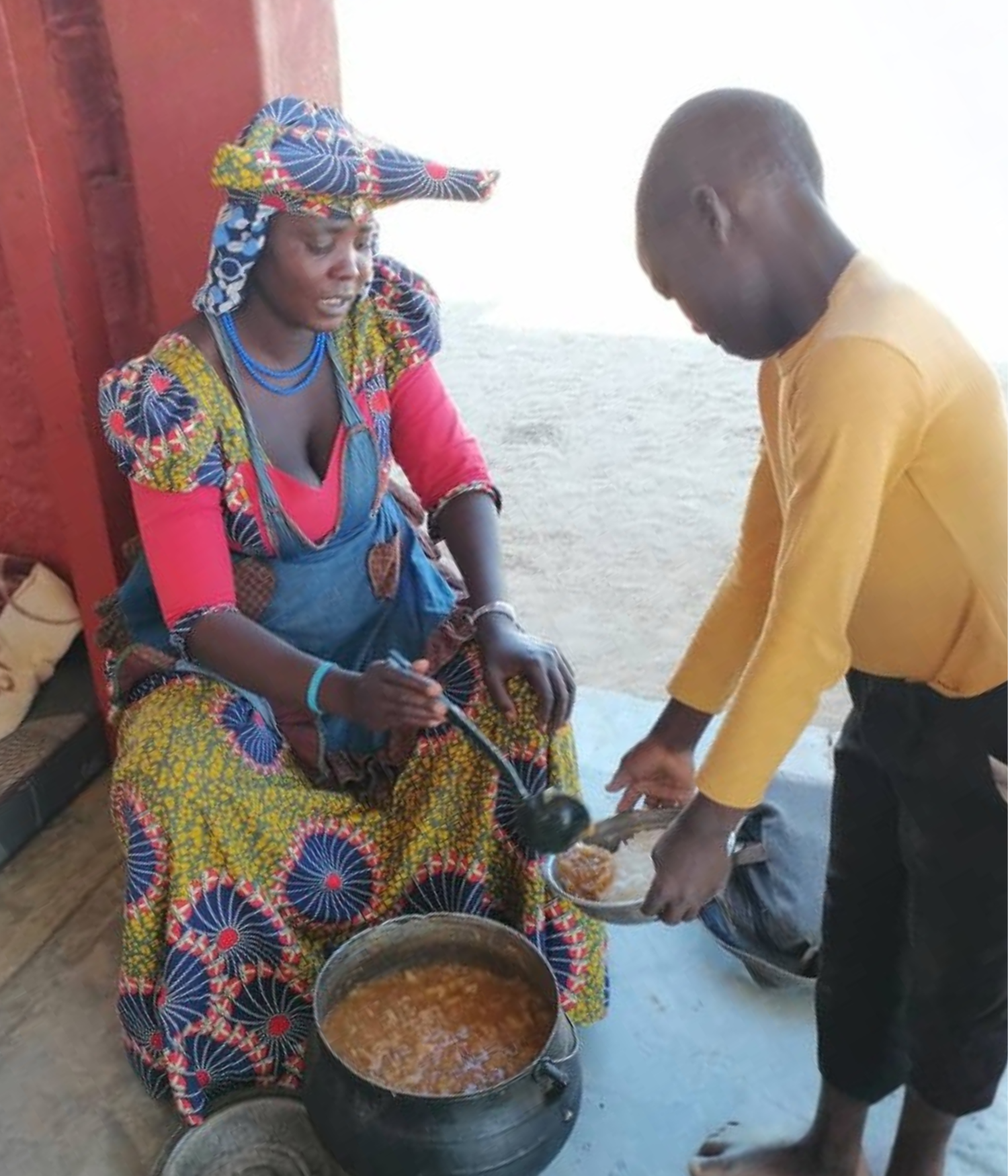
A daily lunch being served as part of the school program in northern Namibia.
Over the past couple of years, we’ve shared stories about a small, remote community in northern Namibia and a school lunch program we support through our partnership with Abercrombie & Kent Philanthropy. When this first came together, we were simply looking for a way to help. We remember a conversation with Keith Sproule, Executive Director of AKP, who shared something that has stayed with us since:
“If you want to make a meaningful difference in education in communities like this, start with something simple. Start with lunch. Because if a child is thinking about where their next meal is coming from, it’s hard to expect them to focus on learning.”
In our last article, we shared that we would provide an update, and recently we received the latest report. Our contribution to this program is not a large one, which is actually a reminder that making a meaningful difference doesn’t take as much as you might think. Still, the numbers are encouraging. Around 150 students are now receiving daily lunches at Puros Ondao Mobile Primary School, and attendance has reached 100% even in the afternoon, where it was once closer to 25%. What stood out even more was how the program is supported. Families contribute firewood, community members help cover the cooks’ wages, and a small school garden provides vegetables for each meal. What began as a simple initiative has become something shared and sustained collectively. Reading that update, we found ourselves thinking less about the program itself and more about the community behind it. And unexpectedly, it brought us back home.
On paper, our community and the Puros Conservancy could not be more different. Here, in Lake Oswego tens of thousands of people live within a relatively small area. In northern Namibia, small Himba communities are spread across vast, rugged desert landscapes. At first glance, there is very little overlap, but as is often the case, when you’re open to seeing it, there’s more that connects us than makes us different.
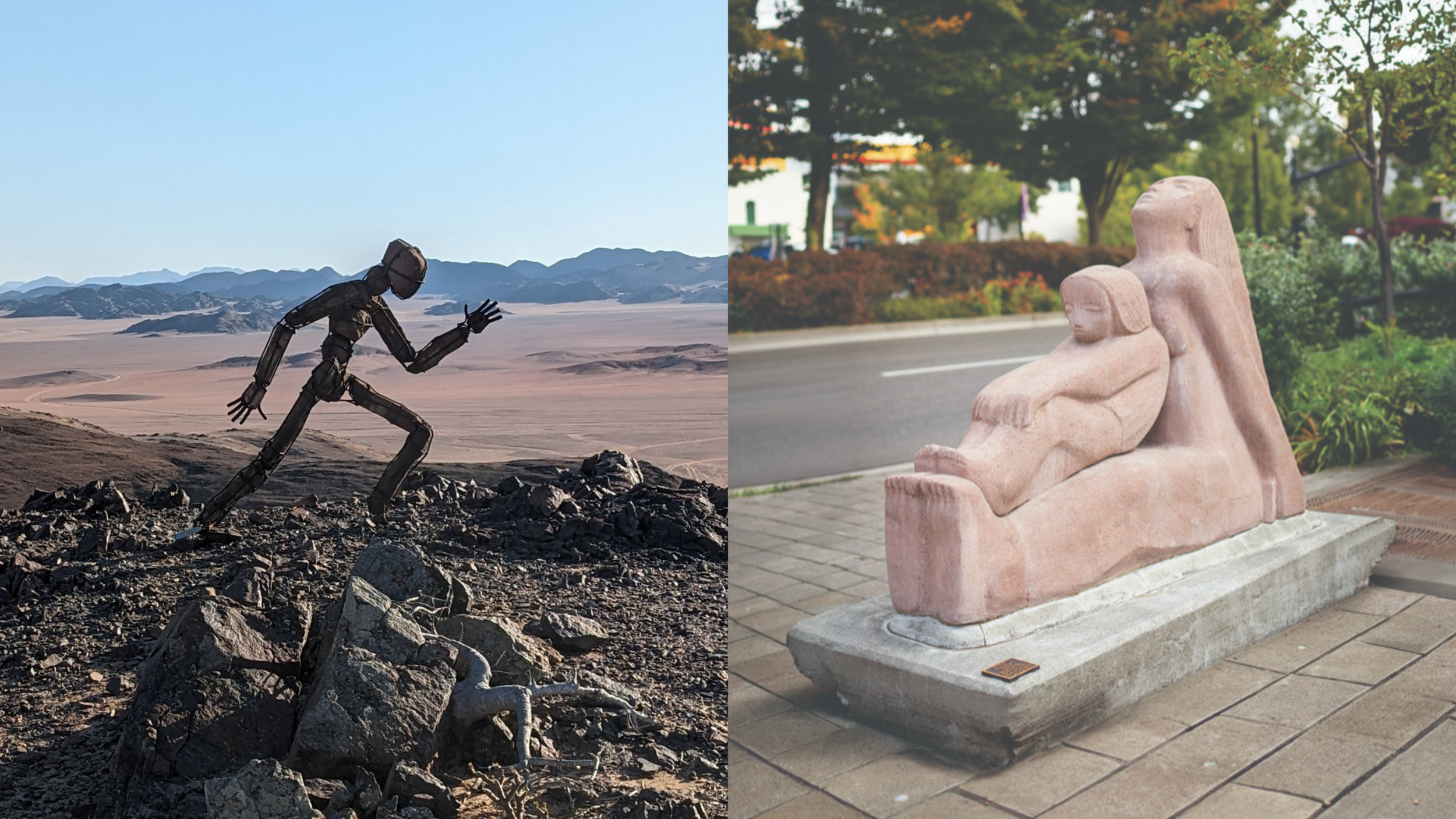
The Running Man in Namibia and Sunbathers by Ken Pateky in Lake Oswego’s Gallery Without Walls.
There were a number of smaller connections along the way, and one of them came when we were out on safari one day. Our guide, Wana (pronounced “Wah-nay”), took us to see a couple of stone figures that seemed to appear out of nowhere. At the time, I remember thinking it felt a bit like a Namibian, almost Banksy-like version of the Gallery Without Walls. Scattered throughout the hills of the Puros Conservancy, these figures, often referred to as the Lone Men of Kaokoland, are built from local rock and set into the landscape. They are not marked or explained. You simply come across them. Here in Lake Oswego, the Gallery Without Walls, supported by our friends at the Arts Council of Lake Oswego, invites people to pause and engage with their surroundings in much the same way. While very different in origin and intention, it occurs to me now that both encourage you to slow down, notice what’s around you, and connect with a place without needing everything to be explained.
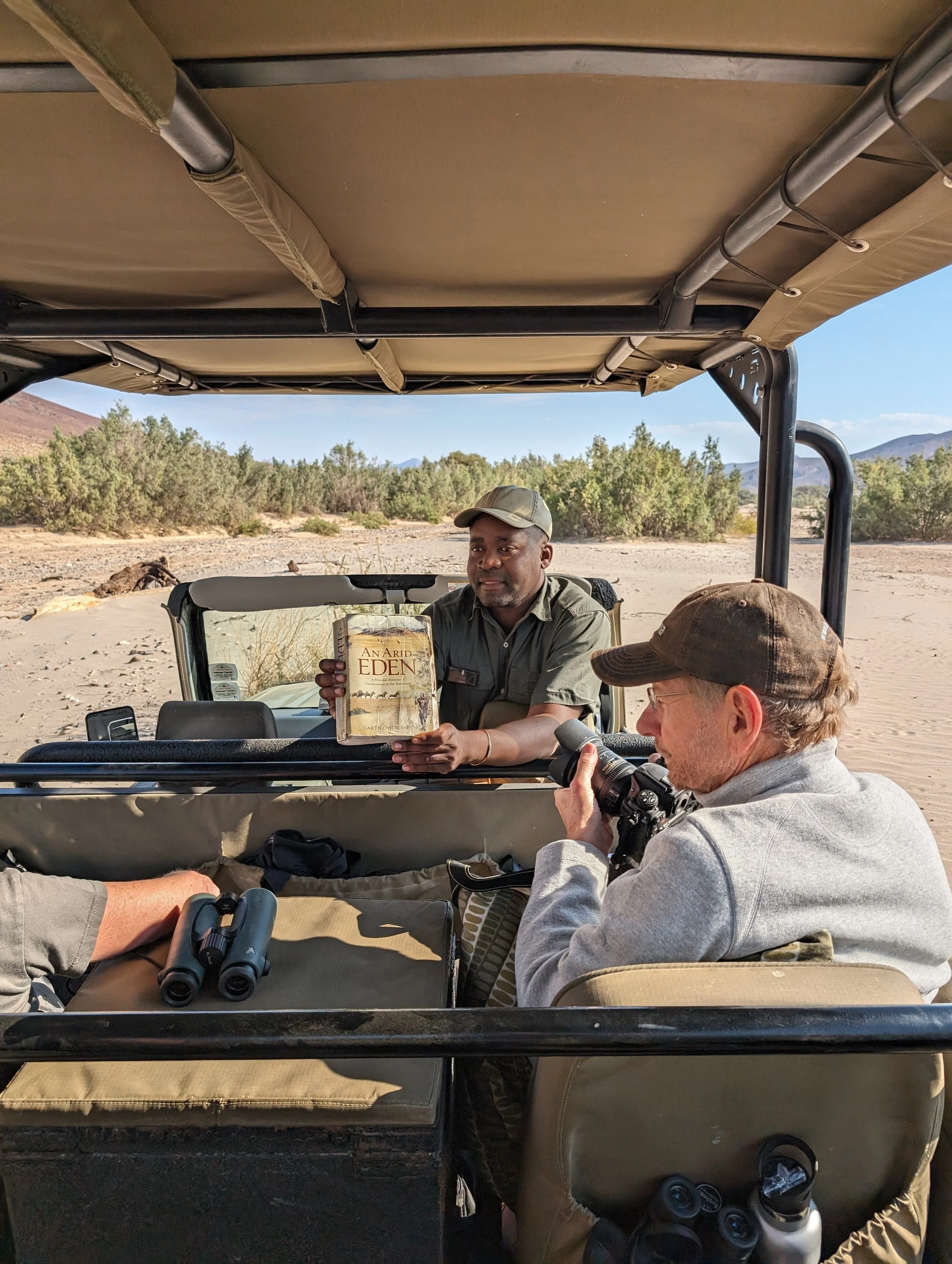
Wana introducing the Puros Conservancy through An Arid Eden, a story of community-led conservation in northern Namibia.
During that same trip, we spent more time with Wana, a highly regarded ranger at Okahirongo Elephant Lodge. He is known for tracking desert-adapted elephants and lions across the Hoarusib Riverbed, and the experiences themselves were extraordinary. But what stayed with us most had nothing to do with that. It was how he carried himself within his own community. Wana is part of the Himba community that calls this region home. He is not just guiding guests through the landscape. He is representing it, interpreting it, and protecting it. A few days into our stay, he took us to visit a local school. The school that became the catalyst for our continued involvement. It wasn’t part of the initial plan or even on our itinerary, and looking back, that felt intentional. There was a sense he was taking the time to understand who we were before deciding whether to share that part of his community with us. It was a reminder that access to a place, especially one rooted in culture and community, is not always immediate. Sometimes it is something you are invited into.
That same sense of stewardship shows up here in Lake Oswego. It’s reflected in the people who support local causes, the businesses that look out for one another, and the events that bring the community together year after year. One of the best examples is the Lake Oswego Lobster Feed & Charity Auction. For more than 40 years, this event has brought together hundreds of people to support local nonprofits, scholarships, and community initiatives, raising over $4.8 million to date. This year’s event will take place on June 20th from 5:00 to 9:00pm, and you can learn more at lobsterfeed.org. If you plan on attending, a seven-night Holland America Line cruise for two will be up for auction as part of the evening, with itineraries including Alaska, Canada and New England, or the Caribbean.
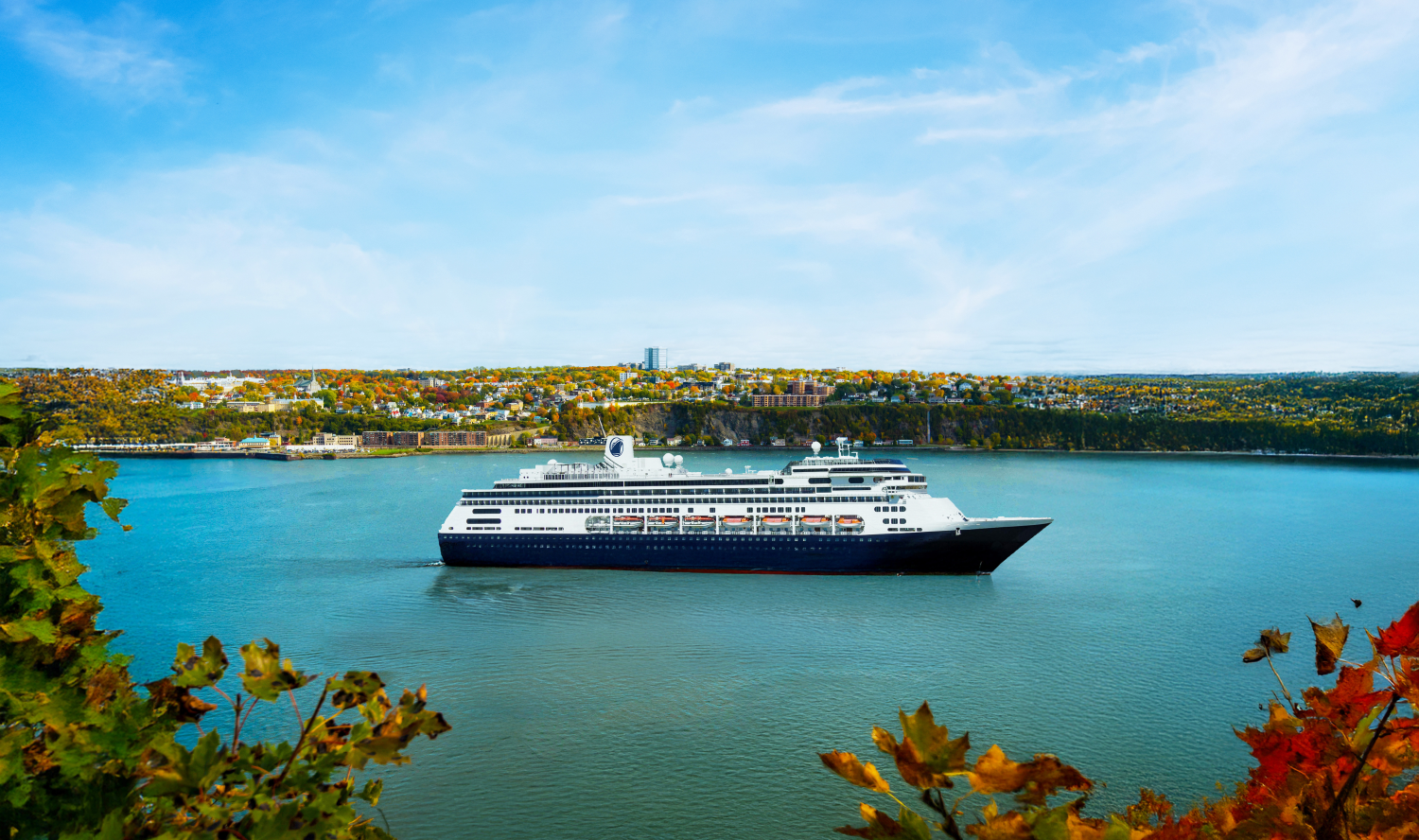
Bid on a 7-night Holland America Line sailing at this year’s Lake Oswego Lobster Feed.
In both places, some of the most meaningful moments are not the ones you see right away. In Namibia, it might be a school quietly supported by the surrounding community. In Lake Oswego, it might be a scholarship funded through an evening event or a local initiative supported behind the scenes. Different setting. Different scale. The same underlying idea.
Travel will always be about discovery. New places, new landscapes, new experiences. But every so often, it offers something just as meaningful: a reminder that even in communities a world apart, the values that bring people together are often the same.
Planning something like this?
When the details matter, our team is here to guide every step with thoughtful planning, trusted partnerships, and personal support before, during, and after travel.